
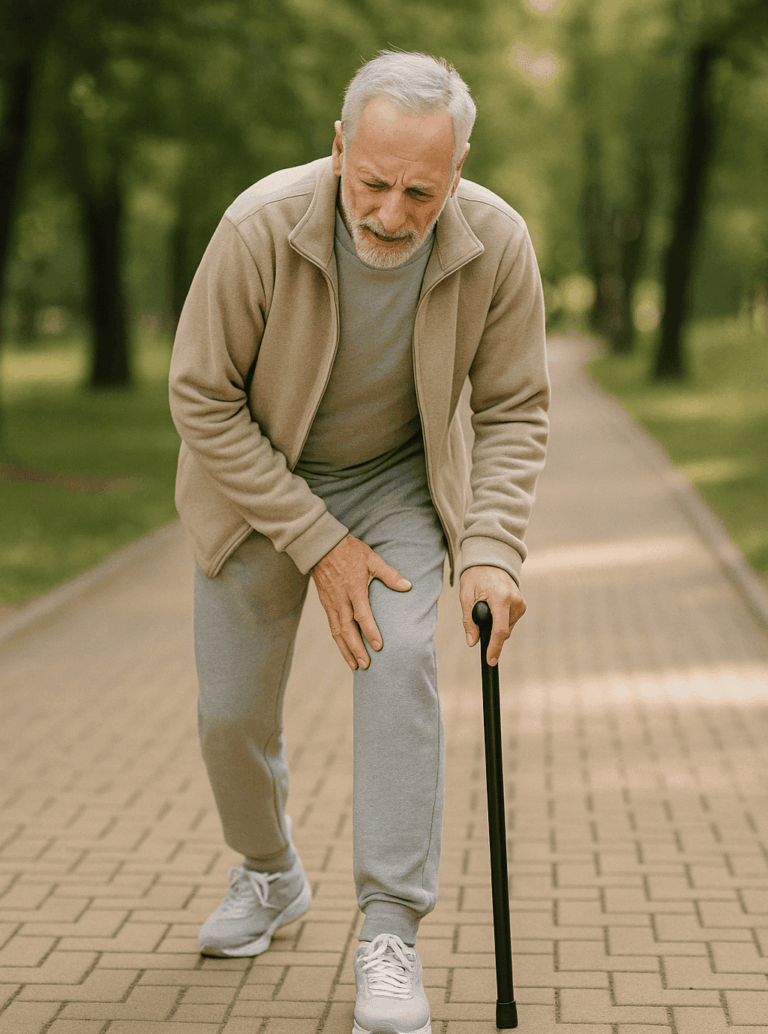
Growing older is a beautiful journey, but for many people, knee pain becomes a constant companion with age. Tasks like walking, climbing stairs, or sitting on the floor may start feeling difficult.
But here’s the good news — knee pain with age is common, but it is not unavoidable. With the right care, exercises, and lifestyle adjustments, you can maintain strong and healthy knees.
Dr. Rameshwar Kumar, one of India’s most trusted orthopedic experts, explains why this happens and how you can manage it naturally.
There are a few common reasons behind age-related knee pain:
Cartilage acts as a cushion between bones. Over time, this cushion becomes thinner due to repeated use — leading to pain and stiffness.
Knee-supporting muscles like quadriceps and hamstrings become weak with age, causing pressure directly on the joint.
Conditions like osteoarthritis become more common with age and can cause swelling, pain, and limited movement.
As we age, synovial fluid — the natural lubricant in our joints — decreases, leading to friction and discomfort.
Less movement, weight gain, and poor posture add extra pressure to the knees, accelerating pain.
The goal isn’t just pain relief — it’s restoring movement and preventing further damage.
Here are effective tips from Dr. Rameshwar Kumar:
Simple movements like:
can improve support and reduce pain.
Applying a warm pack improves blood flow and relaxes tight muscles.
Every extra kilogram adds pressure on your knees. Even losing 2–3 kg can make a big difference.
It reduces strain and prevents unnecessary stress on knee joints.
Comfortable, cushioned shoes reduce impact and protect your knee joint.
A gentle massage with warm oil may reduce stiffness. Physiotherapy under expert guidance can speed up recovery.
Include:
to support bone and joint health.
If knee pain:
then consulting an orthopedic expert like Dr. Rameshwar Kumar is the best step.
“Growing older doesn’t mean you must live with pain. With the right steps, you can protect your knees and stay active for life.”
— Dr. Rameshwar Kumar